
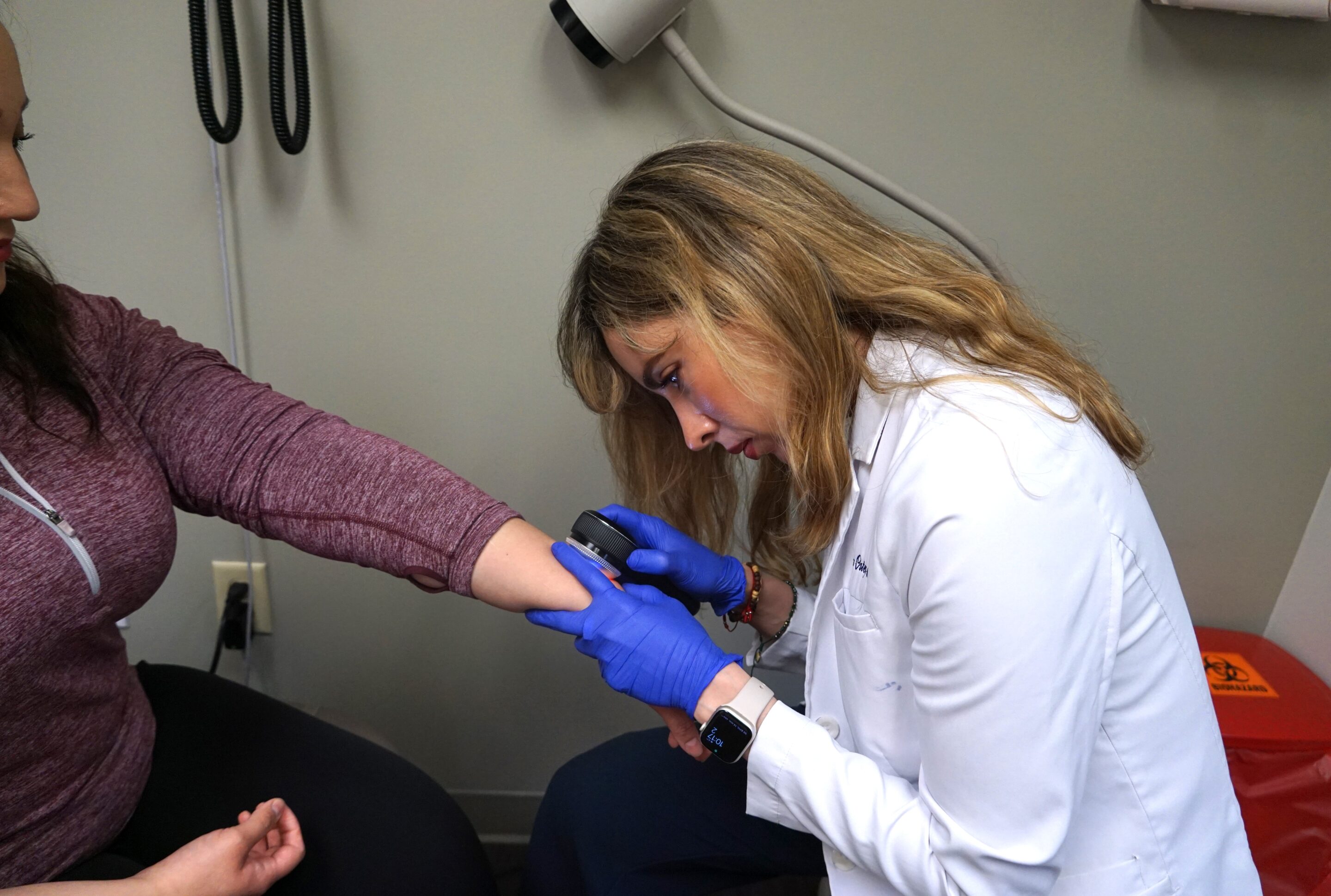
Dr. Zaira Ortega Provides Evidence-Based Recommendations to Keep Skin Healthy
VENICE, CA — As summer arrives and brings longer days, stronger sun exposure and more time outdoors, Venice Family Clinic skin specialist Dr. Zaira Ortega is providing tips that L.A. residents can use to protect their skin and stay healthy through this summer and beyond.
“Summer is an especially important time for skincare, but this guidance applies year-round,” says Dr. Ortega. “I regularly see patients in their forties who come in with changing moles or sun damage that has accumulated over a lifetime. I always remind all my patients, regardless of age or condition, that the best day to start building healthy skincare habits is today.”
Dr. Ortega’s guidance comes as Venice Family Clinic, a nonprofit community health center that cares for 45,000 people across the Westside of L.A., Inglewood, the South Bay and everywhere in between, recently established a new in-house dermatology practice at its Torrance SkyPark location. For many of the patients Venice Family Clinic serves – 87% of whom live below the federal poverty line – access to dermatology has historically been limited by cost, long wait times and complicated referral processes.
Alongside her service at the Torrance location, Dr. Ortega also sees patients at Chuck Lorre Rose Avenue Health and Wellness Center in Venice. At both locations, patients can receive skin checks, acne treatment, eczema care, evaluation of pigmentation concerns and other dermatology services. Biopsies and additional specialty procedures are available at the Rose Avenue location. These in-house services mean that patients’ moles get checked, skin cancer can be caught early and chronic conditions like eczema and acne are properly treated. “Skin conditions, including skin cancer, can be very treatable when we catch them early. The challenge is that many Clinic patients have never had access to a dermatologist before,” says Dr. Ortega.
To help protect skin health this summer and beyond, Dr. Ortega recommends the following tips:
Wear Sunscreen – Every Day: Many of the skin concerns Dr. Ortega sees every day can be proactively addressed with the most basic but important skincare step: daily application of sunscreen. “Sunscreen is the single most important preventative care tool for healthy skin, because UV exposure doesn’t start or stop at beaches and parks. Sun damage adds up over a lifetime: through the windows of your car, when you’re running errands and even walking to your door.” She recommends applying SPF 30 or higher, broad-spectrum sunscreen every morning as a non-negotiable part of a daily routine. “Applying sunscreen should be like brushing your teeth. It’s an easy habit, and one of the most effective ways to reduce your long-term risk of skin conditions including cancer.” Dr. Ortega also recommends using sunscreen lotions or creams instead of spray sunscreens, which fail to provide even coverage, but points out that any sunscreen is better than none. She also reminds that re-applying sunscreen is often necessary for people spending extended time outside. “Most sunscreens last about 80 minutes and it’s important to reapply accordingly when the UV Index is above 2, especially when sweating, swimming or touching your face.”
In addition to wearing sunscreen daily, other preventative measures can protect the skin too. UPF clothing, wide-brim hats and sun-protective driving gloves offer additional protection from dangerous UV rays.
Keep it Simple: Dr. Ortega notes that a gentle cleanser, unscented moisturizer and sunscreen are all most people need in their skincare routines. For those looking to go beyond the basics, she urges restraint. “More products mean more chances to trigger a rash or irritation.” To avoid adverse reactions, she recommends people introduce one new skincare product at a time. “That way, if you do discover a rash, you’ll know what caused it and can quickly address the problem.”
She points out that people should shower immediately after exercise to remove bacteria and prevent clogged pores. Diet can also be a factor in skincare. “Processed foods and insulin spikes can worsen acne and other skin conditions. No single diet – and especially no fad diet – will fix everything, but a poor diet will usually make things harder to treat. And drink plenty of water!”
Follow Data, Not Trends: “Natural isn’t always better, and many products and routines we see advertised right now are trends not based on evidence,” says Dr. Ortega. “Despite what you may see on TikTok, ‘base tans’ are signs of sun damage, not protection. DIY sunscreen recipes circulating online are not regulated and lack standardized SPF coverage. And fads like beef tallow and juice cleanses have no proven link to improvements in your skin.” She also clarifies that supplements, which are marketed by many health and wellness platforms, will only improve skin or hair health if the user has a specific vitamin deficiency – for instance, biotin supplements are only helpful for biotin-deficient patients – and in fact can make acne worse, or even contribute to abnormal lab results, for those who are not.
Get Checked Out Regularly: Yearly skin checks are a necessary part of your overall health, especially if you spend a lot of time in the sun. “It starts at home,” says Dr. Ortega. “Monitor and occasionally photograph any existing moles so you can track any changes over time. If you notice anything odd, make sure to go see a dermatologist.” When self-checking, she advises looking for the “ABCDEs of moles”: those that are Asymmetrical, have irregular Borders, show multiple Colors, exhibit changing Diameter or Evolve over time. She notes this is especially important for people as they reach their 30s, when years of sun exposure start to show up on the skin in more visible ways.
Dr. Ortega also advises that “patients with a family history of skin cancer, especially melanoma, should schedule a full-body skin check with a dermatologist. Don’t wait until something looks alarming. Getting checked regularly is how problems are caught before they become serious. Regular monitoring and building healthy skincare habits now will pay off in the long run.”
For more information on Venice Family Clinic’s dermatology practice and other specialty care options, visit us online at: venicefamilyclinic.org/care/specialty.
Venice Family Clinic skin specialist Dr. Zaira Ortega examines for potential sun damage.
About Venice Family Clinic
Venice Family Clinic is a nonprofit community health center that is a leader in providing comprehensive, high-quality health care to more than 45,000 people in need annually, regardless of their ability to pay or personal circumstance. The Clinic serves an area that spans the Westside of Los Angeles, Inglewood, the South Bay and everywhere in between. It has a network of clinic locations and Early Head Start centers in Venice, Santa Monica, Mar Vista, Inglewood, Culver City, Redondo Beach, Carson, Gardena, Torrance and Hawthorne, plus mobile clinics and an expansive street medicine program to reach people experiencing homelessness. The Clinic’s comprehensive care also includes mental health services, dental care, vision services, substance use treatment, prescription medications, domestic violence counseling, HIV services, healthy food distributions, health education, health insurance enrollment, child development services and more. For more information, please visit VeniceFamilyClinic.org and follow on Facebook and Instagram.